

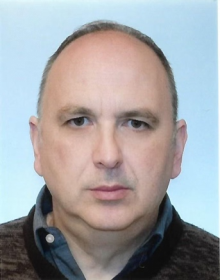
Professor Nicolas Marmier is an internationally renowned environmental geochemist, an expert in interfacial chemistry modeling, and a pioneering scholar in marine and coastal ecosystem protection. He currently serves as a Full Professor at Université Côte d’Azur, formerly Université Nice Sophia Antipolis, and has long been affiliated with the renowned Nice Institute of Chemistry (ICN), a research laboratory associated with Université Côte d’Azur and CNRS. As a strategic scientist with profound international academic influence in microscopic heterogeneous interfacial reactions, radionuclide contamination control, and the high-value utilization of industrial waste, Professor Marmier has long been committed to elucidating the complex chemical evolution of the Earth’s surface and the environmental footprint of industrial civilization. In the international academic community and in scientific cooperation with the Global South, he has demonstrated a broad international vision, maintaining long-term collaborative research partnerships with leading scientific institutions in Europe and North Africa, including Morocco. Through these efforts, he has actively promoted the translation of advanced environmental remediation technologies to low- and middle-income countries, serving as an important academic bridge in global environmental governance.
As an interdisciplinary leader integrating microscopic quantum interfacial chemistry with macro-scale ecological and environmental protection, Professor Marmier’s research focuses on precision modeling in environmental geochemistry, the development and application of surface complexation models (SCMs), proactive defense of marine and coastal environments, and the ecological reconstruction of industrial residues. Drawing on his strong foundation in theoretical chemistry and mathematical modeling, he has systematically elucidated the adsorption, desorption, and three-dimensional migration patterns of radionuclides and hazardous trace elements, including uranium and selenium, as well as highly toxic heavy metals such as chromium, arsenic, cadmium, copper, and molybdenum, in soils, deep-sea sediments, and on the surfaces of key minerals such as hematite, magnetite, and natural clays. To address two major global challenges—the safe disposal of nuclear waste and secondary pollution from industrial heavy metals—his team has pioneered the use of sophisticated surface complexation mathematical models to simulate the thermodynamic reactions of chemical species at heterogeneous mineral interfaces, thereby laying a solid scientific foundation for the safety assessment of high-level radioactive waste geological repositories and the ecological restoration of abandoned mining areas worldwide.
With decades of dedication to global environmental science and coastal ecological security, Professor Marmier has achieved remarkable accomplishments in landmark academic output, major national research programs, and green intellectual property translation. In applied ecology, he has led engineering research on the stabilization of trace elements in eutrophic and contaminated sediments along the French Mediterranean coast, including the L’Estaque harbor area in Marseille, and has developed an innovative industrial pathway for using bauxite residues and derivatives such as Bauxaline® to immobilize and stabilize toxic elements in contaminated sediments. Across authoritative academic and doctoral research platforms such as ResearchGate and theses.fr, his scholarly output covers a wide range of ecological behaviors, from emerging organic pollutants such as antibiotics to conventional inorganic toxicants. A series of internationally advanced research projects led or substantially supported by Professor Marmier, including studies on the adsorption characteristics of arsenic and cationic dyes from aqueous solutions by natural clays, the biogeochemical effects of uranium on soil bacterial communities, and experimental and modeling investigations of silicate adsorption on iron oxides, continues to guide innovation in global interfacial geochemistry and marine environmental safety.