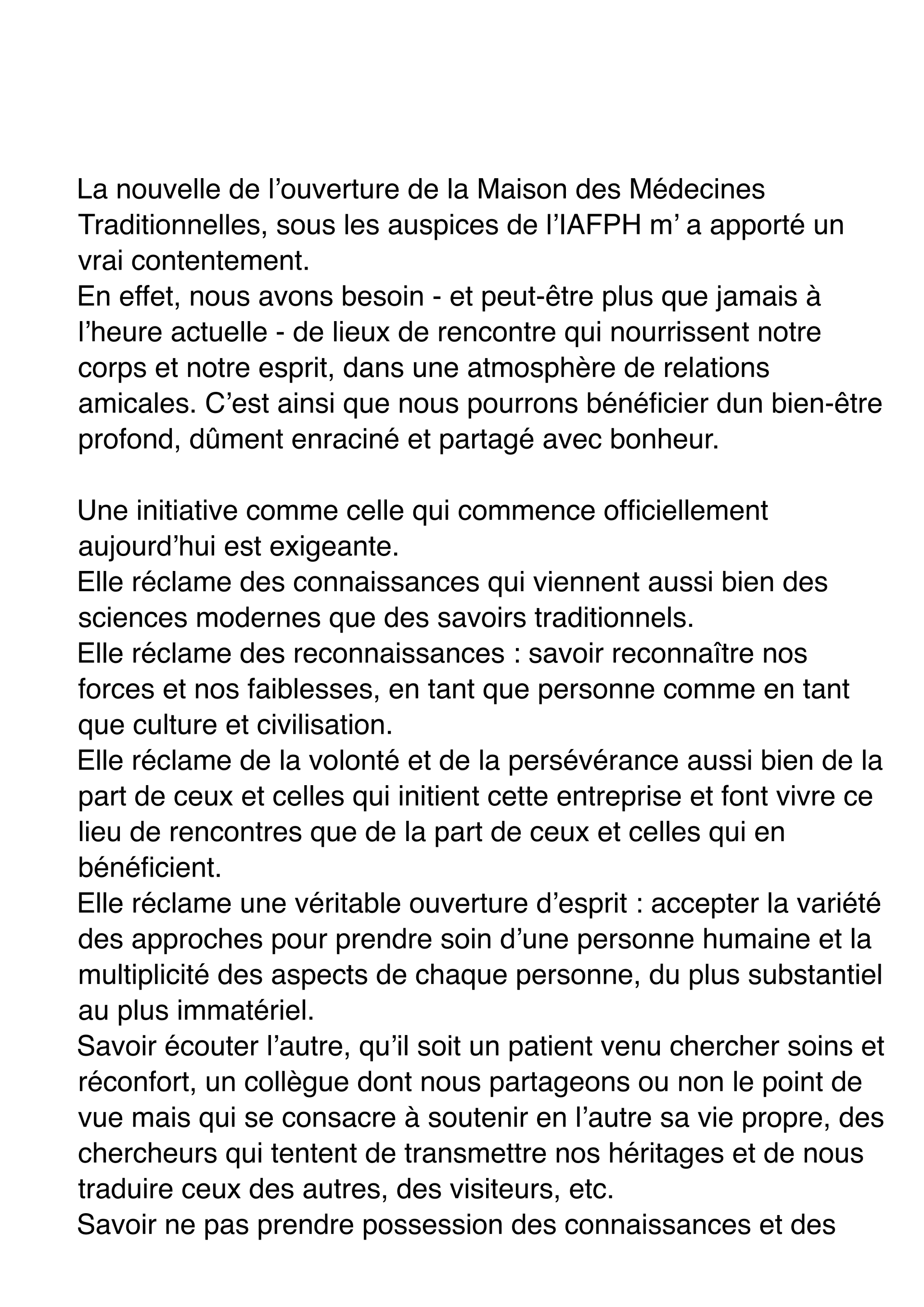
Ms. Elisabeth Rochat de la Vallée, a distinguished French sinologist, professor of classical philosophy, and founder of the Ecole Européenne d’Acupuncture (EEA), recently sent a congratulatory letter to IAFPH. In her message, she extended her warmest congratulations on the formal establishment of the Paris Center for Traditional Medical Culture, praising its role in bridging the wisdom of ancient traditions with modern health science.
On the eve of the inauguration of the Paris Center for Traditional Medical Culture, Ms. Elisabeth Rochat de la Vallée, a prominent scholar in the field of Traditional Chinese Medicine (TCM) research in France and a renowned sinologist, sent a special letter to the International Academy of Food and Phytomedicine Homology (IAFPH) to extend her congratulations on the center’s establishment. Although Ms. Rochat de la Vallée was originally invited to attend the relevant events, she was unable to be present in person due to scheduling conflicts. Nevertheless, through her congratulatory letter, she expressed her firm support and high expectations for IAFPH's efforts in promoting the dissemination of traditional medical culture and the development of the Center.
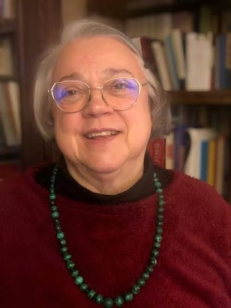
Ms. Elisabeth Rochat de la Vallée, a world-leading sinologist and preeminent expert in classical Chinese medical texts.
In her letter, Ms. Rochat de la Vallée expounded on the value of traditional medicine in contemporary society from a profound cultural dimension. Quoting the wisdom of the Tao Te Ching—"To give birth but not to own, to act but not to claim, to accomplish but not to dwell on success"—she affirmed the original aspiration of this undertaking, rooted in "fraternity" rather than mere profit-seeking. In her view, a truly vital medical enterprise should not stem from possession, utility, or self-display, but should be built upon continuous service, humble dedication, and respect for life. Only such a spirit can sustain traditional medicine as a cultural force that cares for life, understands the body, and connects people.
The Paris Center for Traditional Medical Culture is more than just an exhibition space; it is a service platform for traditional medical culture oriented towards the public, families, and communities. It aims to transform the knowledge of nourishment, balance, and mind-body care within traditional medicine into daily health services that are accessible, tangible, and practical for the public.
Here, traditional medicine is no longer an abstract cultural symbol or professional knowledge limited to specific groups. Through concrete scenarios such as moxibustion, tuina (massage), physical conditioning, seasonal maintenance, and family health management, the Center hopes to allow the public to engage with traditional medicine in a more natural and intimate way, understanding the wisdom of bodily rhythms, preventive healthcare, and holistic balance.
To support the Center in better serving the public, IAFPH will continue to leverage its advantages in academic resources, international networks, and professional synergy. On the occasion of the opening, IAFPH donated a batch of professional medical equipment to the Center, taking practical action to support the standardized and high-quality implementation of traditional medicine in Paris.
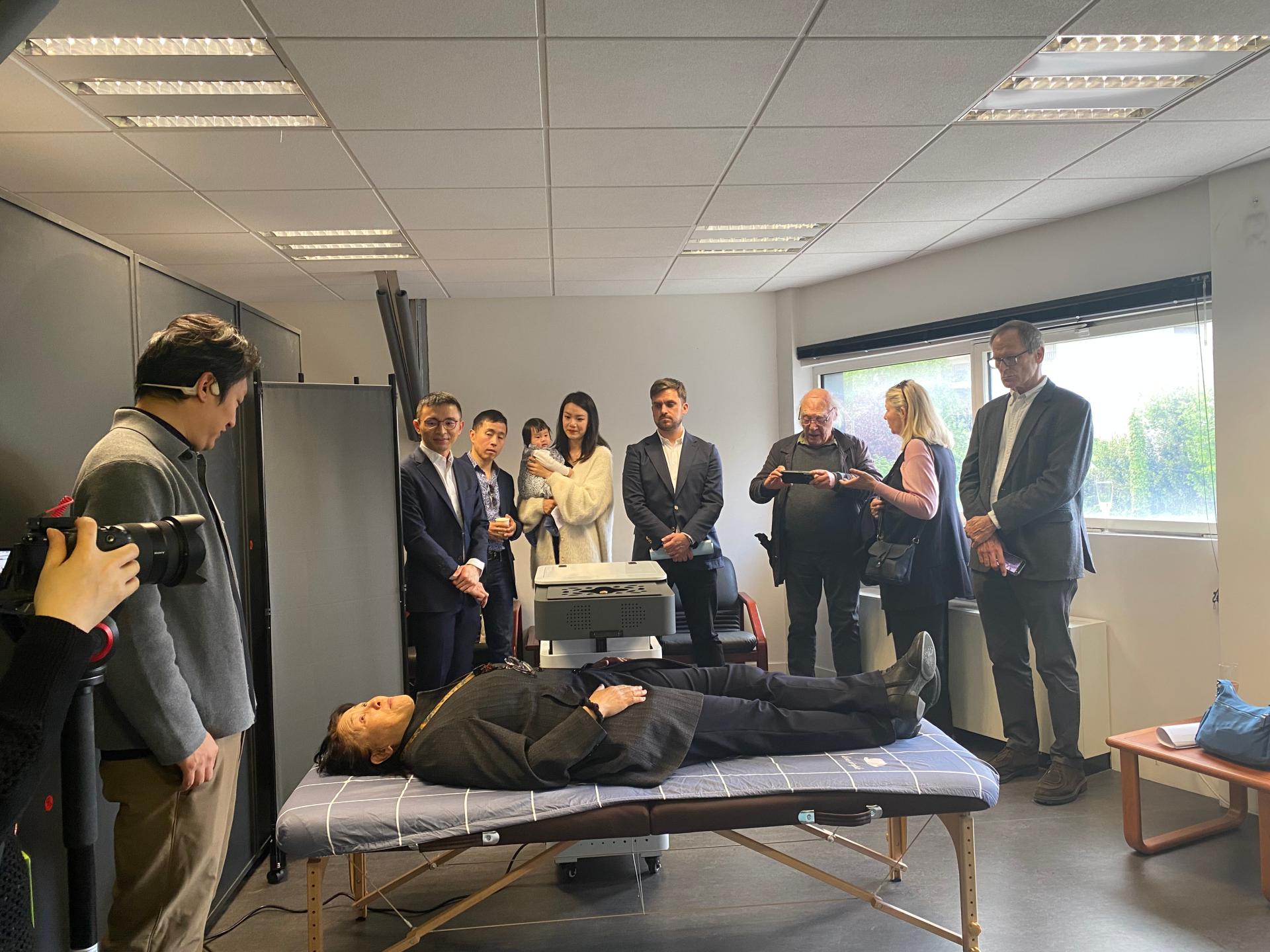
Dr. Feng Shixing, Executive Vice President of IAFPH and Director of the Paris Center for Traditional Medical Culture, presents the "Fuyang Moxibustion" device donated by IAFPH.
Looking ahead, IAFPH will work hand in hand with the Paris Center for Traditional Medical Culture to invite more internationally influential academic, medical, and cultural researchers to participate, consistently disseminating traditional medical content that is standardized, reliable, culturally profound, and practically valuable. IAFPH also sincerely invites every friend visiting Paris to step into the Center, to rediscover their bodies, and to reclaim the balance of life.
Just as Ms. Rochat de la Vallée wished at the end of her letter: may this place become a "confluence," where people who share a common commitment to caring for life can meet.